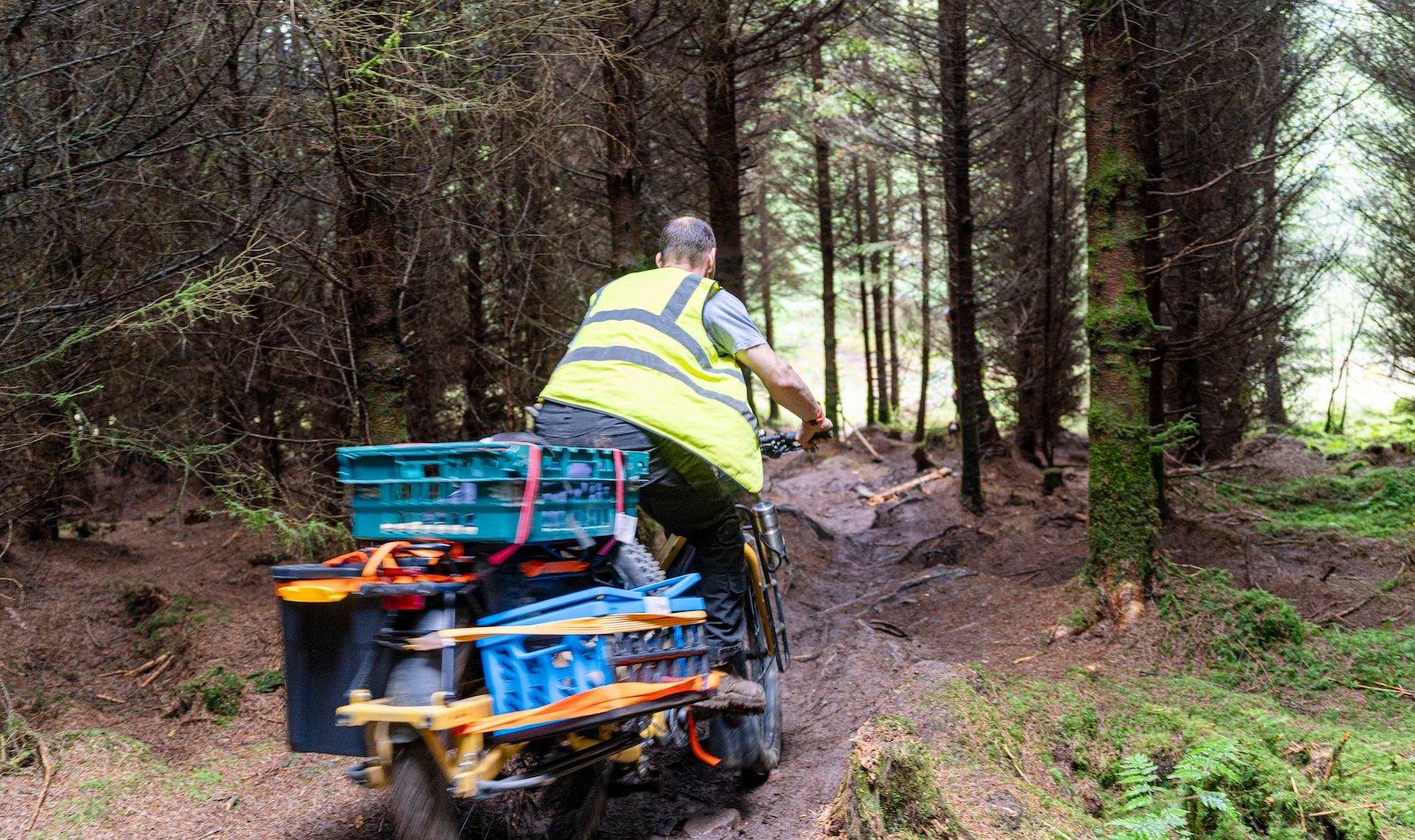
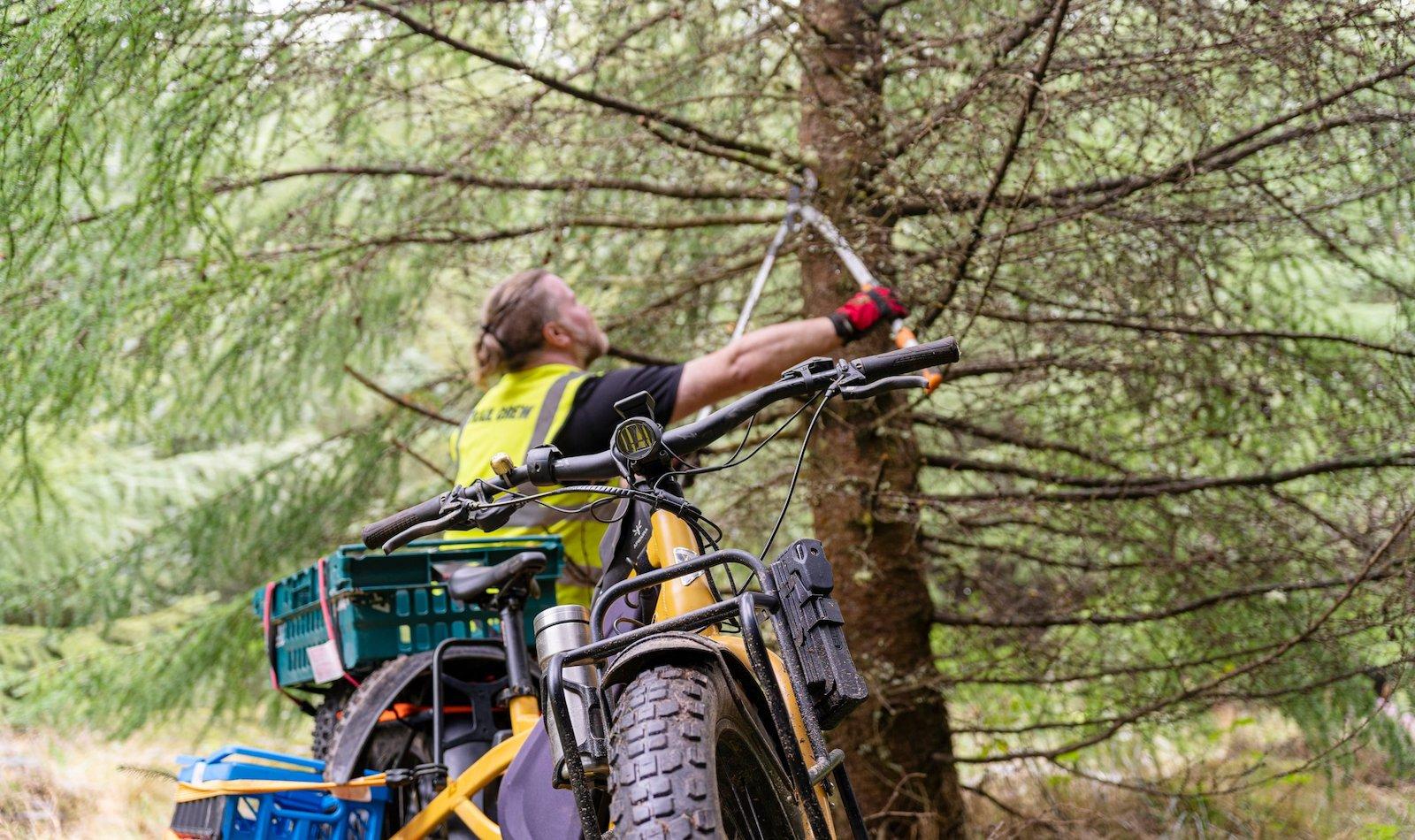
Across Scotland, mountain bike trails wind through forests and across hillsides, forming an important part of the country’s outdoor infrastructure. These routes support recreation, tourism, and local economies, but they also require constant attention. Trail maintenance is skilled, labor-intensive work, often carried out in remote terrain where access is limited and conditions are unpredictable.
Much of this responsibility falls to organized trail groups and volunteer-led associations that function much like professional operations: coordinating crews, managing safety, working with landowners, and maintaining large trail networks with limited resources.
A regional trail organization at work
In Tayside and Perthshire, that role is filled by the Tayside Trail Association (TTA), a volunteer-run nonprofit responsible for maintaining wild, rider-built trails across a wide geographic area. What began as a small group of motivated mountain bikers has grown into a coordinated effort covering Pitmedden, Kinnoull and Deuchny, Dunkeld and Birnam, and Ballo, four distinct trail zones maintained by dedicated local crews.
TTA operates with landowner approval, insurance, and formal planning, organizing dig days and maintenance work that keeps trails safe and rideable for mountain bikers and other users alike. Like many trail organizations, their biggest challenge is not a lack of motivation; it is logistics.
The access problem every trail organization faces
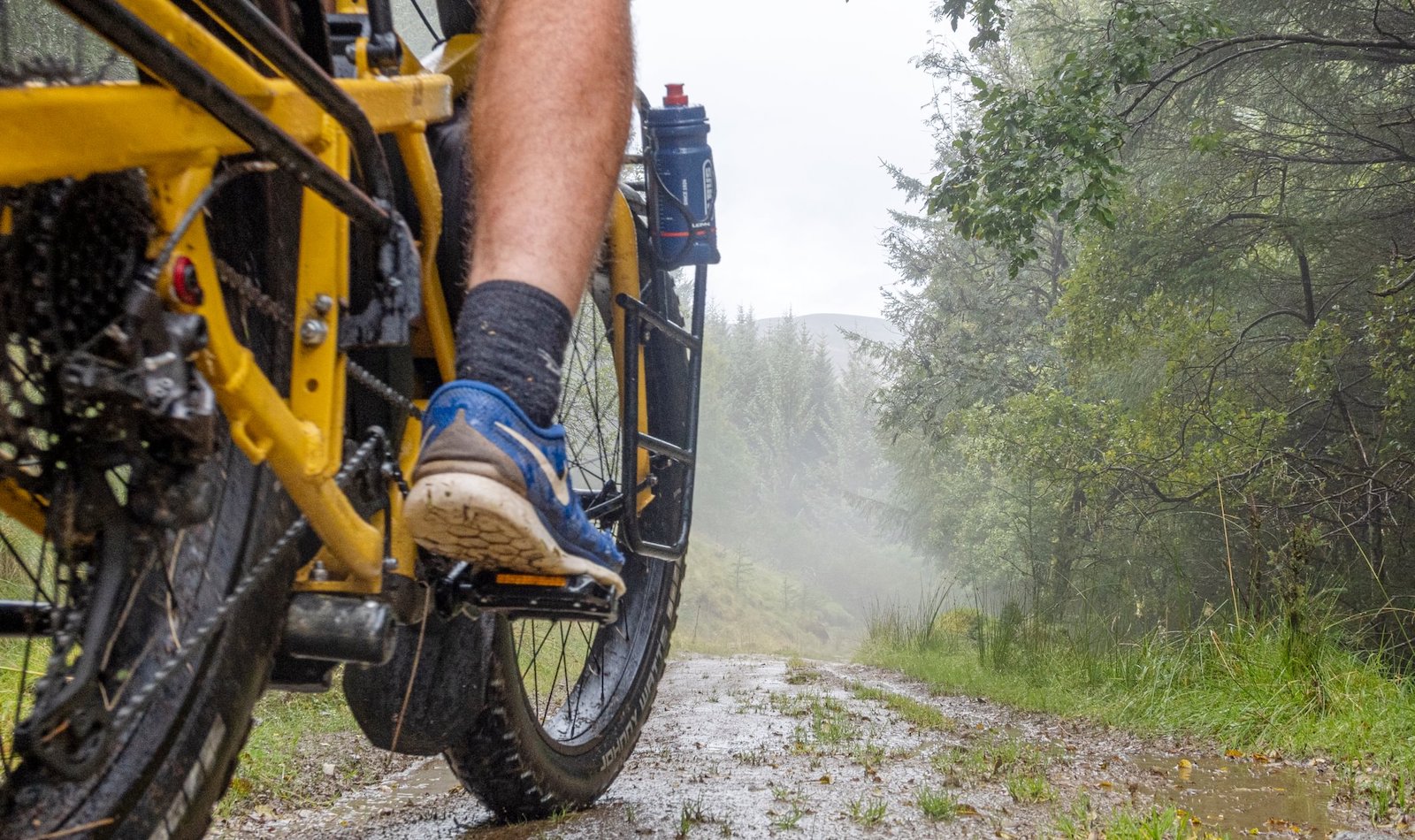
Unlike purpose-built trail centers with vehicle access and machinery, many of the trails TTA maintains sit deep in the woods or across exposed hillsides. Access is often limited to narrow paths, steep forest tracks, or technical singletrack. For trail crews, this means that moving tools, materials, and equipment to the work site is often the most time-consuming part of the job.
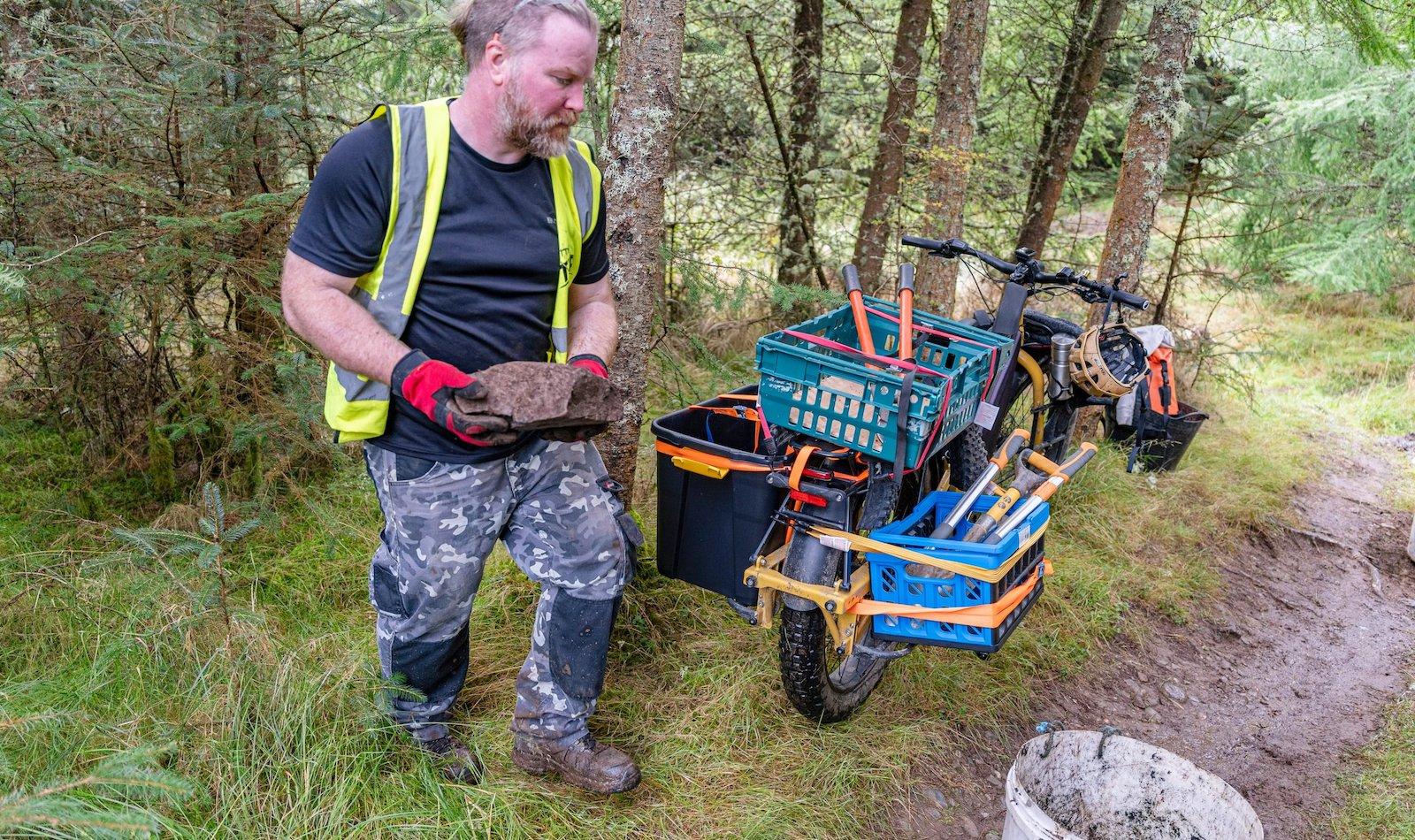
“We build trails and features deep in the woods,” explains long-time volunteer Graham Barry. “Usually, the team has to walk in with the tools, carrying the rock and material to places that aren’t easy to get to.”
For trail organizations, this is a familiar scenario: repeated trips on foot, physical fatigue, and limited ability to move heavy materials efficiently.
A new kind of trail-work tool.
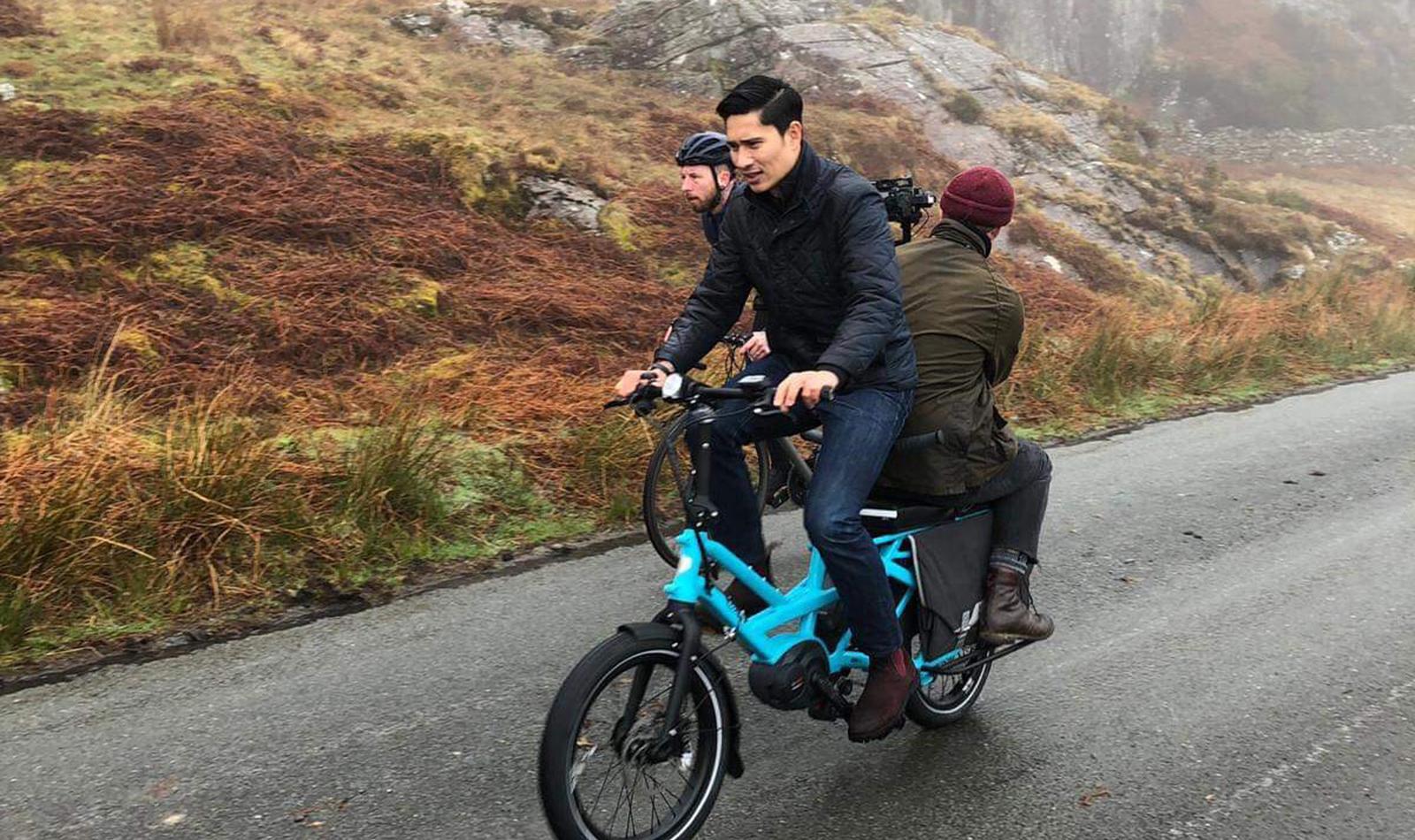
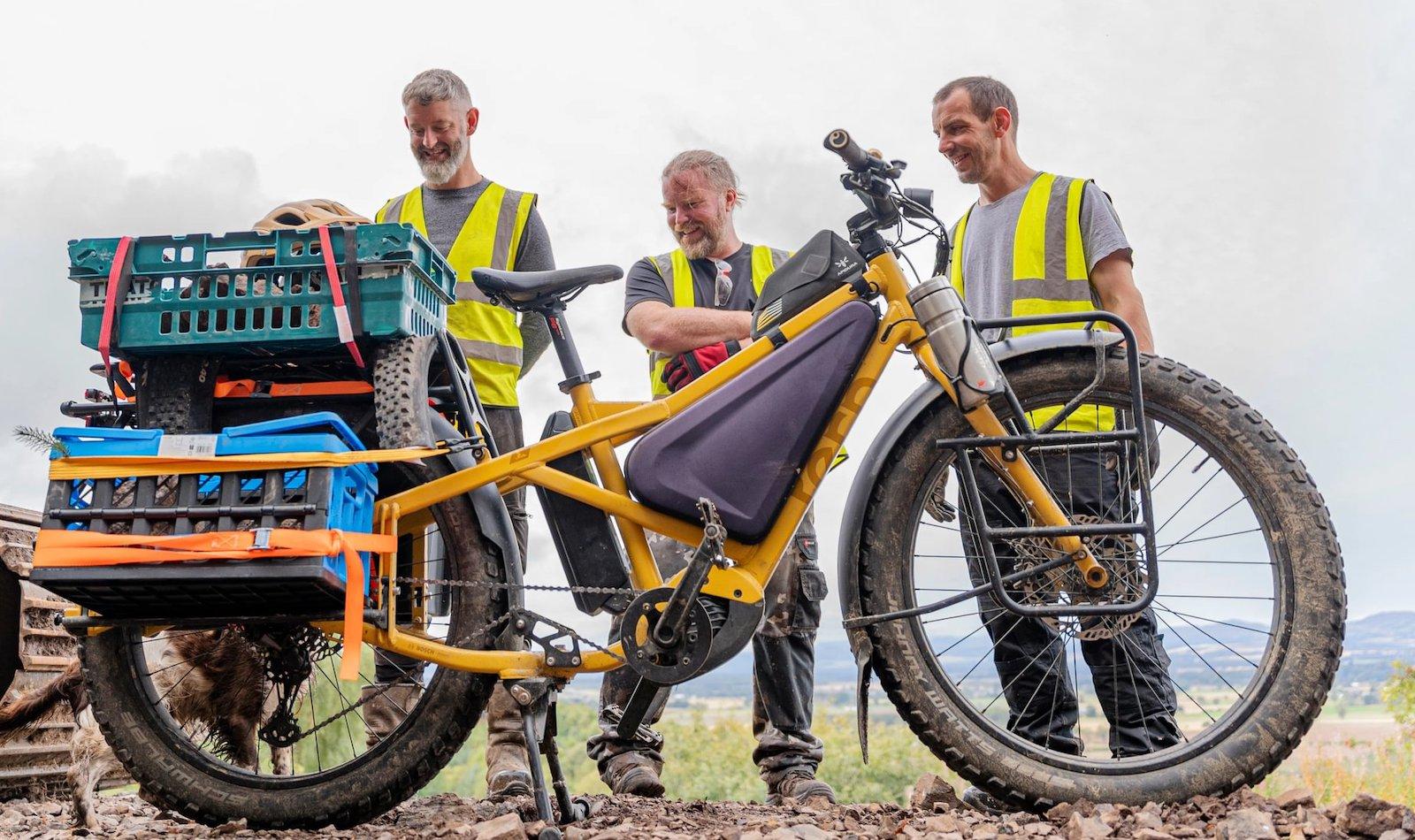
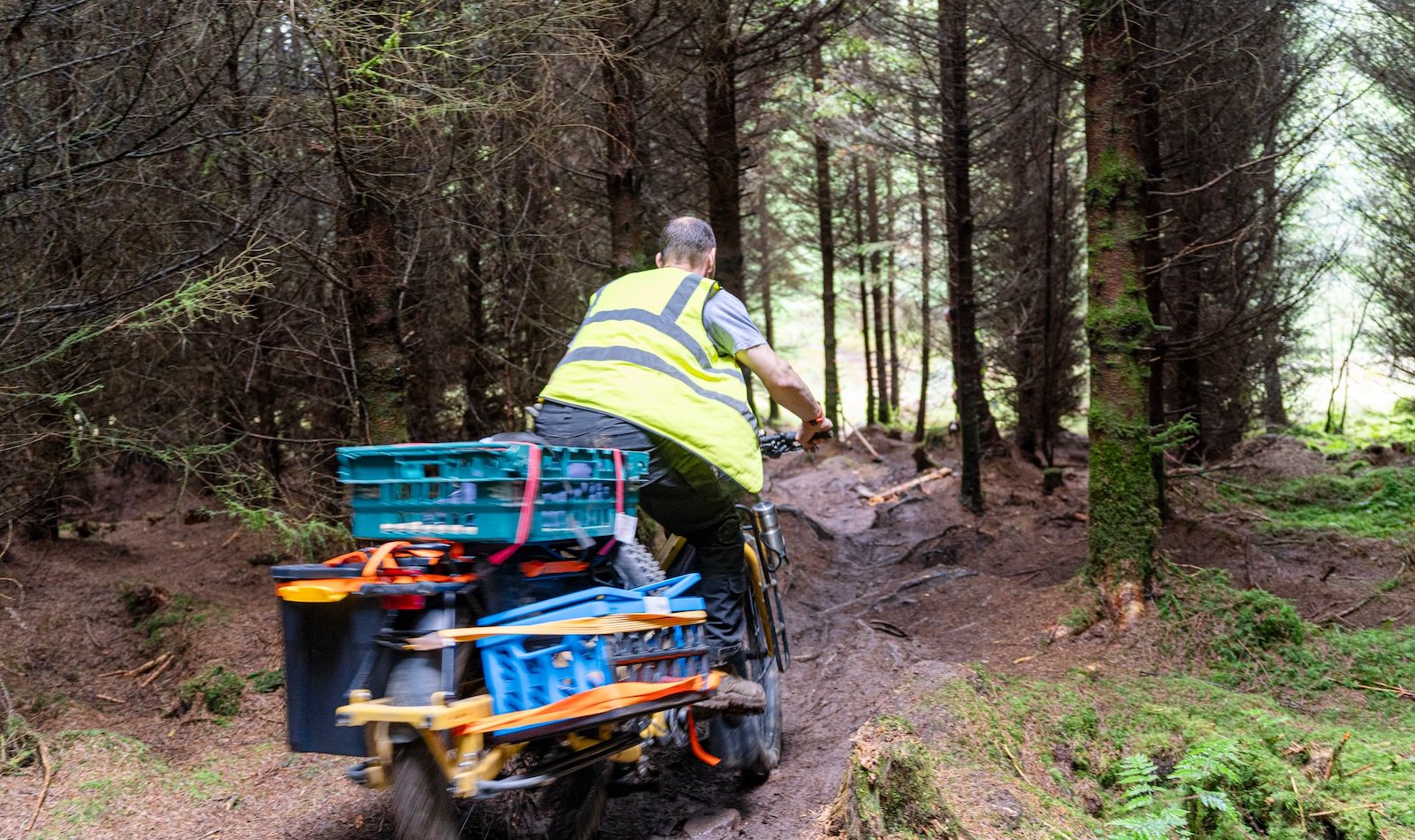
For crews working far from vehicle access, reliable trail-work tools are essential. This year, TTA addressed that challenge with the Tern Orox, an electric cargo bike capable of safely hauling tools and heavy materials into rough, off-road terrain.
Most cargo bikes are designed for paved or urban environments and are not intended to venture into steep, uneven terrain. At the same time, standard e-mountain bikes are not designed to carry heavy equipment safely over long distances. The Orox is purpose-built to bridge that gap, hauling rock, dirt, tools, and supplies directly to the sections of trail where work actually happens.
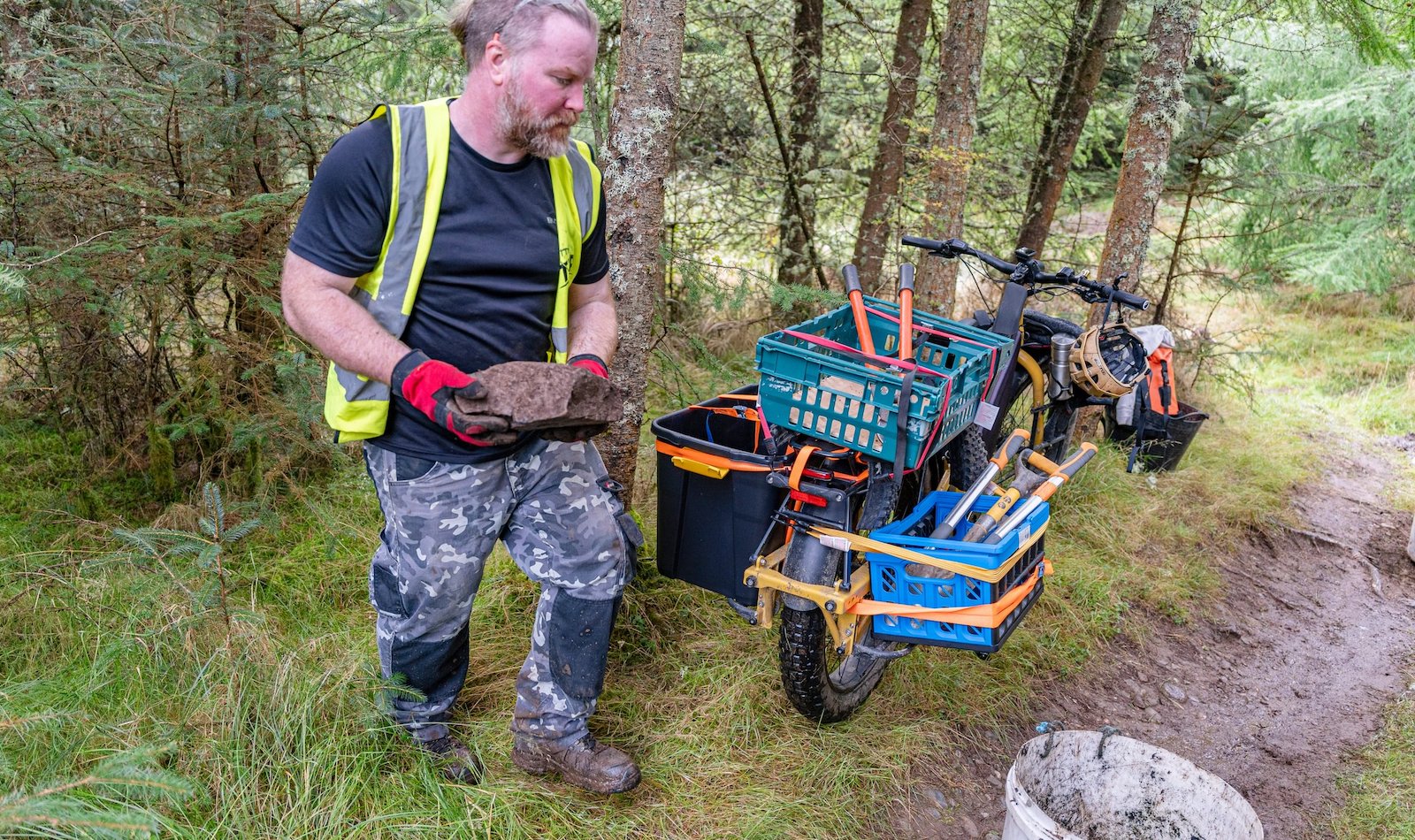
Certified by EFBE Prüftechnik (a leader in accredited mechanical testing for weight loads for bicycles and their components) for a 180 kg (397 lb) maximum gross vehicle weight when riding off-road, the Orox’s frame and fork have been rigorously tested to withstand rough ground, repeated impacts, and even small drops while fully loaded. For trail organizations, that certification matters: it means predictable performance, reduced risk, and equipment that can be relied on in demanding conditions.
Stability, control, and real-world handling
Load capacity alone is not enough for trail work. A bike hauling heavy materials over roots, rocks, and uneven ground must also remain stable and easy to control. The Orox is designed with that reality in mind.
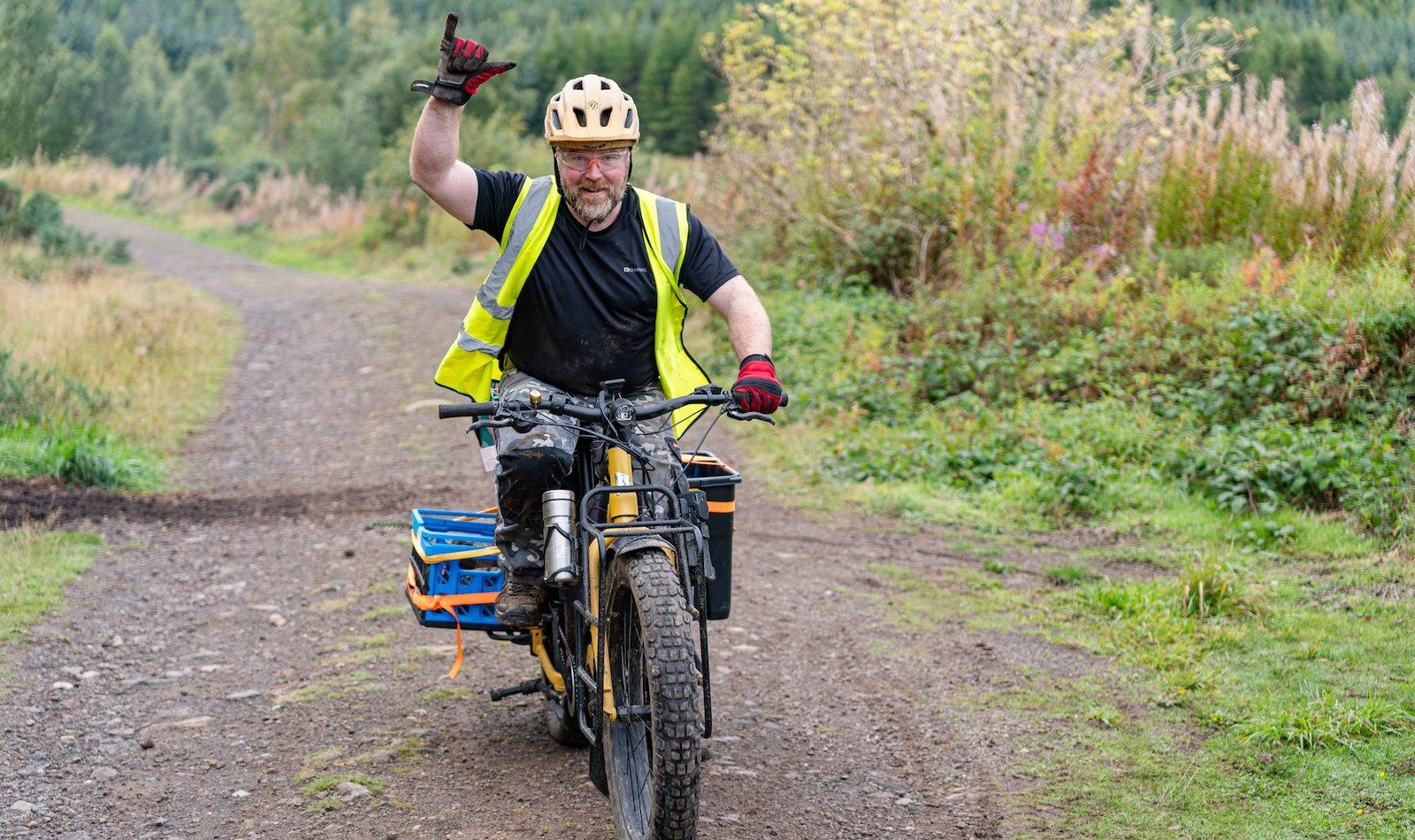
Its reinforced frame resists flex under load, while its geometry helps keep the bike composed when transporting materials through technical terrain. Fat, grippy tires provide traction in wet, hilly environments common to Scotland’s forests, and the Bosch motor delivers the torque needed for steep access climbs, even when the bike is heavily loaded.
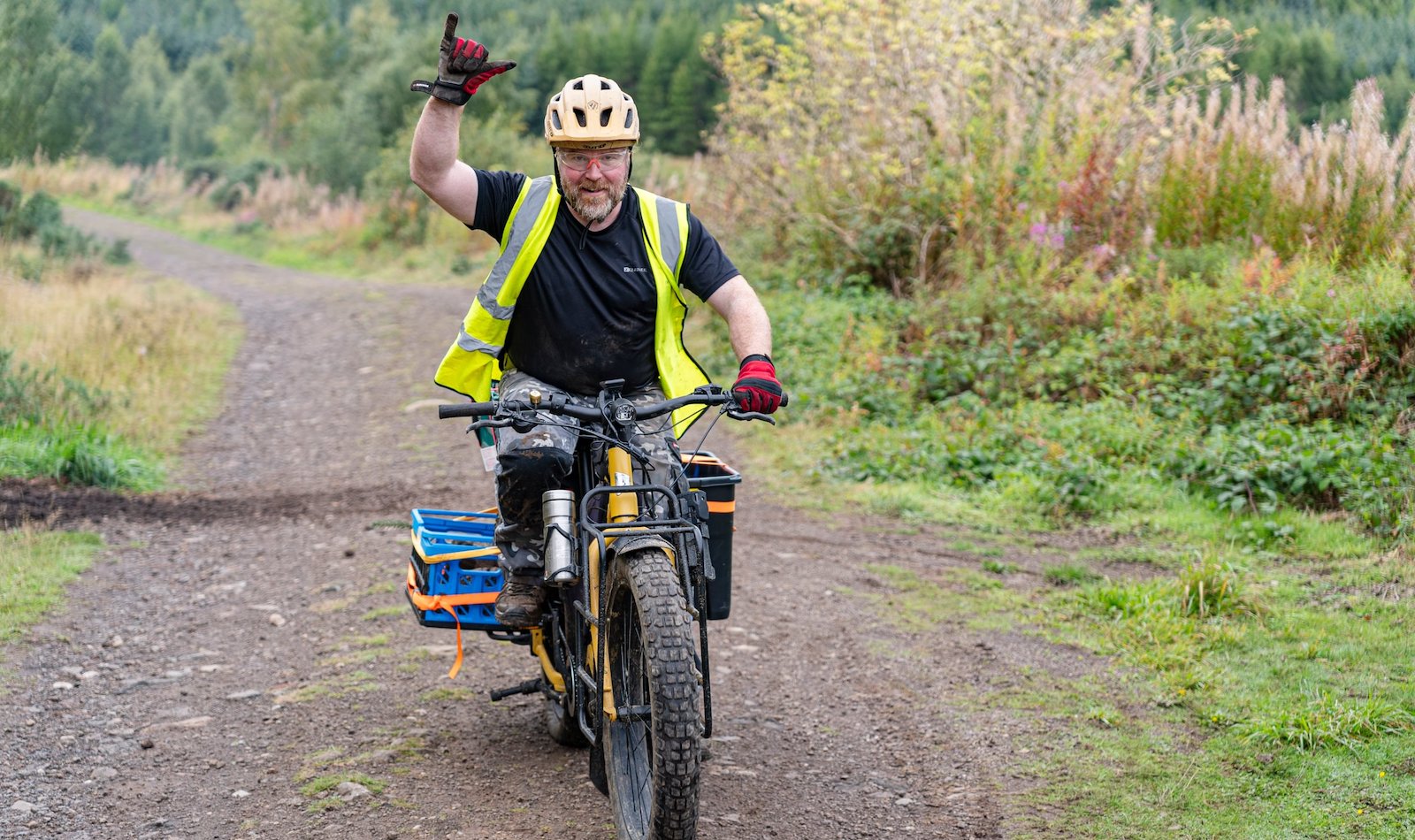
For crews operating across large trail networks, the Orox’s dual-battery option adds another layer of practicality, allowing long workdays without constant returns to base for recharging.
Configuring the bike for trail operations
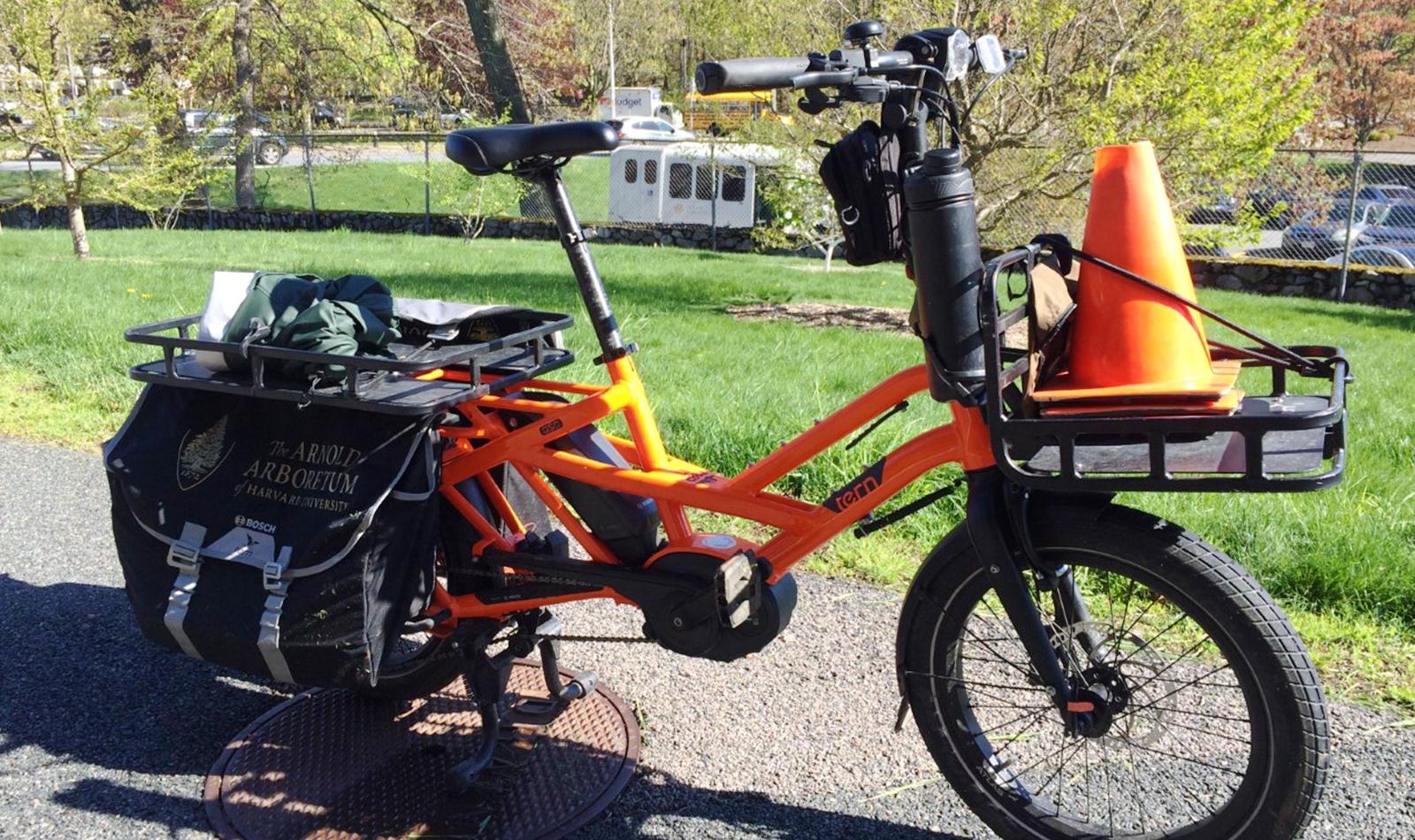
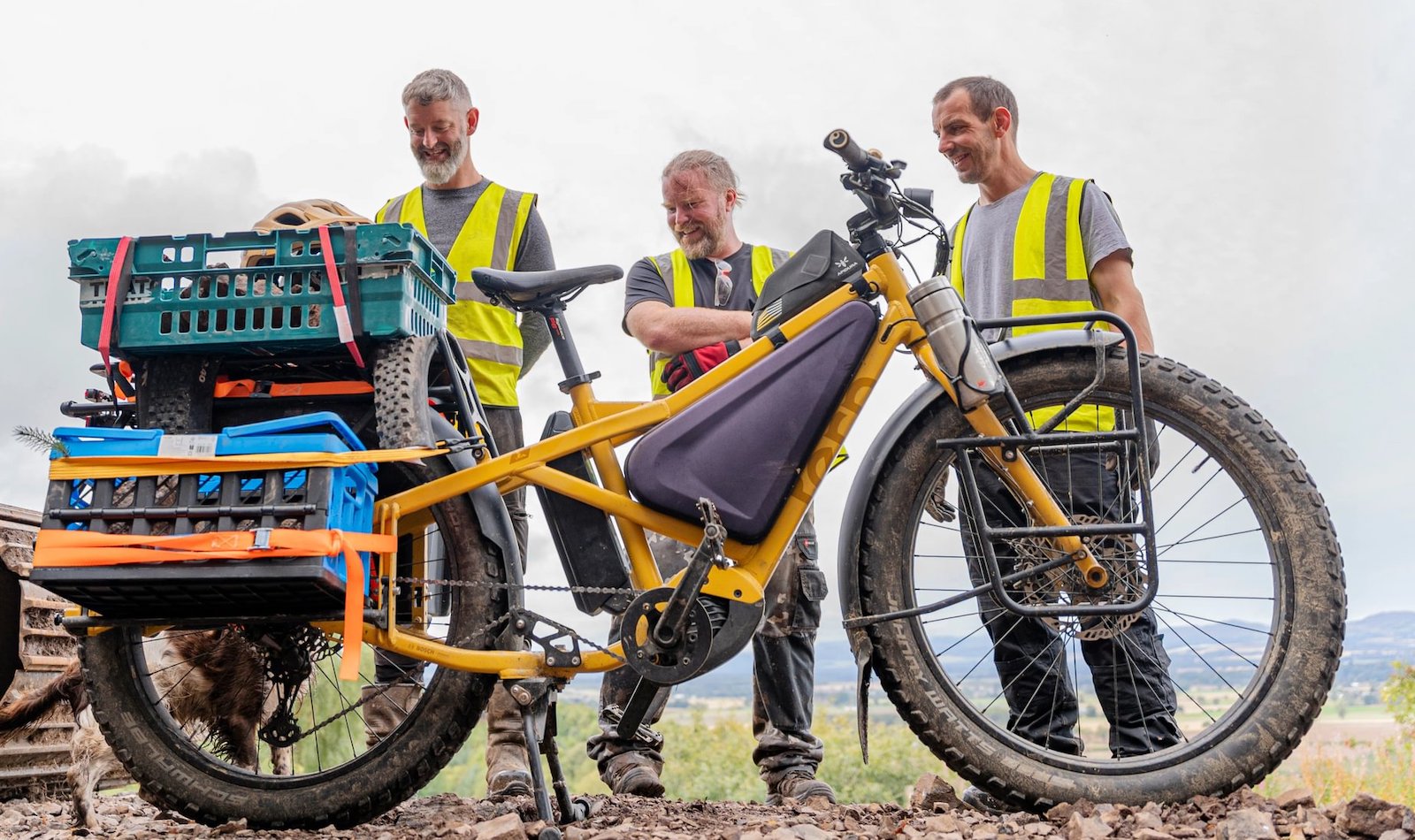
Beyond the base bike, modular cargo options allow trail crews to configure the Orox for specific tasks. Large-capacity panniers carry up to 72 liters each, making them well-suited for tools, rocks, and bulk materials. A sturdy front Trail Rack handles lighter, bulky items such as buckets, signage, or first-aid supplies.
Trail work rarely looks the same from one day to the next. Systems that adapt easily to different loads and task requirements become valuable parts of a trail organization’s toolkit, not just transportation.
Case study: preparing for race-level trail demand
TTA began using the Orox at a critical moment, during preparations for the Ballo trails, just ahead of the Scottish Enduro Championships. Major events bring a surge in rider traffic, placing added strain on trail surfaces, drainage, and key features. Meeting that demand required moving heavy materials efficiently and reaching remote sections of the course where vehicles could not go.
“We used the Orox to bring materials in,” Graham explains. “We can fix the problem areas so they can cope with that extra level of traffic. And we can also use it to bring in race markers, signs, timing equipment, and get around.”
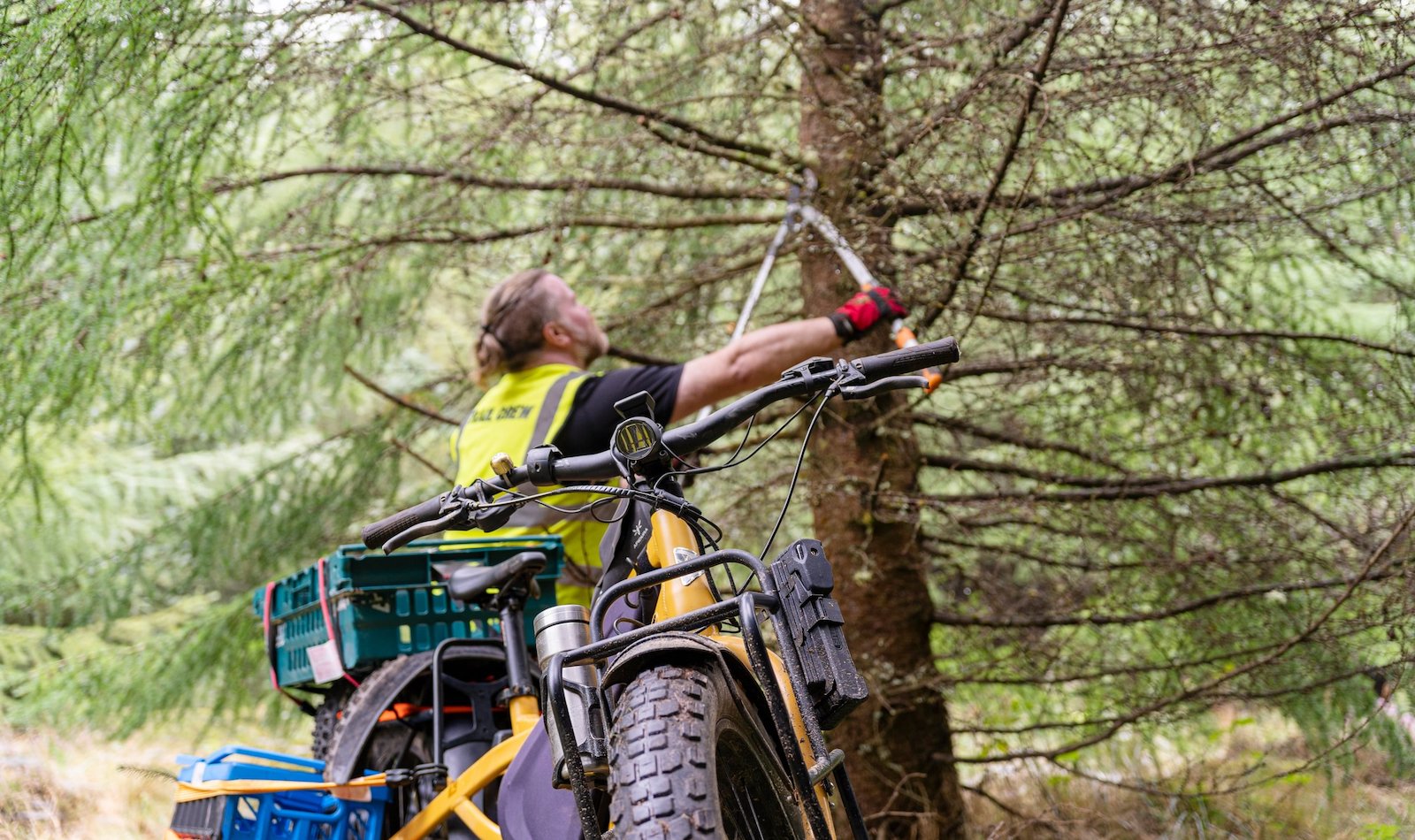
The objective, he added, is always to leave the trails in better condition than they were found. Having a bike capable of carrying whatever was needed, and delivering it precisely where it was required, proved to be a significant advantage.
Race preparation also required access for event officials. While fire roads provided partial coverage, many critical features lay beyond vehicle reach. A bike able to haul equipment through narrow forest corridors helped keep operations running smoothly, from early preparation through race day and the final sweep.
By providing dependable access to remote trail sections, the Orox helped streamline preparation, race-day logistics, and post-event trail work.
Efficiency beyond trail building
For trail organizations, the value of an off-road cargo bike extends beyond digging and construction. Inspections, signage installation, safety checks, event support, and first-aid access all benefit from a reliable method for moving equipment through terrain that vehicles cannot reach.
These practical gains translate directly into saved time, reduced fatigue, and more effective use of volunteer or staff labor.
For TTA, the impact has been recognized nationally. The association was recently named Best Trail Association at the Scottish Mountain Bike Awards, and Graham Barry was honoured as a Local Hero in recognition of consistent, well-organized trail care delivered at scale.
A tool that scales with professional trail work
For businesses, contractors, and organizations responsible for maintaining trail networks, the challenges are consistent: access, efficiency, safety, and sustainability. Tools that reduce logistical friction and allow crews to focus on quality work make a measurable difference.
The Tern Orox demonstrates how an off-road cargo platform can support real trail operations by moving materials, equipment, and people efficiently into terrain where traditional solutions fall short. With the right tools in hand, trail organizations can continue maintaining the landscapes that make Scotland’s riding exceptional.